Concerto C2 – Musica mista e live electronics
Programma
Pierpaolo Barbiero
Satellite (2025)
per frame drum e live electronics
frame drum: Alessandro Gizzi
live electronics: Pierpaolo Barbiero
Cesare Saldicco
IRIN (2023)
per clarinetto in Sib e supporto digitale
clarinetto: Alice Cortegiani
diffusione del suono: Cesare Saldicco
Marco Cucciniello, Giuseppe Bergamino
Disgregazione (2026)
solo live electronics
live electronics: Marco Cucciniello, Giuseppe Bergamino
Fabio De Sanctis De Benedictis
Cielo sereno, scintillante di stelle (2024)
per clarinetto, supporto digitale e live electronics
clarinetto: Alice Cortegiani
live electronics: Fabio De Sanctis De Benedictis
Stefano Mancuso
The dissolution of the present moment (2026)
per voce e live electronics
voce: Viviana Carniti
live electronics: Stefano Mancuso
Davide Tedesco, Alice Cortegiani
Studio sul corpo d’ombra #2 (2025)
a più corpi, per clarinetto contrabbasso, dispositivi in contro-reazione diffusi sfericamente e live electronics
Alice Cortegiani: clarinetto contrabbasso ed elettronica analogica
Giuseppe Silvi: dispositivi analogici e digitali, proiezione del suono
Davide Tedesco: coordinamento generale ed elaborazione digitale
Selezione della call for works
Note di sala
Pierpaolo Barbiero — Satellite
Questo lavoro esplora il feedback acustico come materiale musicale e come sistema da suonare. Microfono, diffusori, software e tamburo a cornice costituiscono un unico strumento, il cui comportamento dipende dall’interazione tra spazio, suono e gesto performativo. Muovendosi attorno al microfono, il performer modifica il feedback utilizzando il tamburo e il proprio corpo come schermi acustici, influenzando riflessioni, risonanze e condizioni di propagazione del suono. L’elettronica dal vivo analizza il materiale prodotto dal sistema e lo trasforma, generando nuove configurazioni sonore che vengono reintrodotte nell’ambiente. Il brano si sviluppa come un processo di attivazione, trasformazione ed estinzione, nel quale feedback acustico, elaborazione digitale e azione dei performer si influenzano reciprocamente, dando origine a un equilibrio sonoro continuamente mutevole.
Cesare Saldicco — IRIN
A study for clarinet and electronics centered on a single complex musical figure, articulated into three sub-elements: an ascending anacrusis, a fibrillation that constitutes its central core, and a concluding descent. The materials were subsequently developed within the software IRIN, from which the title derives, an environment for micromontage that, integrating graphic editing and algorithmic processes, enables an organic and detailed transformation of the figure in the dialogue between instrument and electronics.
Marco Cucciniello, Giuseppe Bergamino — Disgregazione
This work explores sound as unstable matter, exposed to processes of fracture, dispersion, and transformation. The composition begins with partially recognisable sonic materials, gradually subjected to internal tensions that alter their density, texture, and direction. Rather than treating destruction as disappearance, the piece approaches disgregation as a change of condition: what breaks apart does not vanish, but is redistributed into fragments, residues, and sonic particles. Through timbral transformation, rarefaction, accumulation, and collapse, the work traces the moment in which sound loses its unity and becomes a field of forces, dispersed energy, and fragile remains.
Fabio De Sanctis De Benedictis — Cielo sereno, scintillante di stelle
Cielo sereno, scintillante di stelle was commissioned by the Puccini Chamber Opera Festival of Lucca, on the occasion of the centenary of Puccini’s death. It is for clarinet, live electronics and electronic sounds. The title is taken from a caption in the third act of Tosca, whose famous clarinet solo provides the musical material from which to develop form, pitches and other components. The work therefore unfolds through various episodes, in a palindromic form with a final Coda. The attentive listener will be able to find timbral references, sometimes quotations, of the third act of Puccini’s opera, but also of other points of the lyrical opera. Technologically we make use of assisted composition tools, both for the symbolic musical component and for the generation and spatialization of electronic sounds. There is also an autobiographical link, with reference to the youthful period in which the composer played in the orchestra at the Puccini Festival in Torre del Lago.
Stefano Mancuso — The dissolution of the present moment
The Dissolution of the Present Moment is an exploration of the impossibility of experiencing the present within our spatiotemporal domain. The performer seeks a state of temporary yet infinite perceptual equilibrium using phonetic gestures, breaths, and resonant sounds. Meanwhile, the l.e. continuously transforms and disperses the vocal material into autonomous sonic entities distributed throughout the space. This process transports the present moment into our temporal and perceptual domain.
Davide Tedesco, Alice Cortegiani — Studio sul Corpo d’Ombra #2
What is a sound? What is listening? What is the body? What is the soul? A work emerging from research — through the study of instruments, opening the senses in the attempt to grasp the ungraspable, opening the senses toward the constant tension of an infinite depth. A path of exploration that seeks to subtract matter — to make room, to listen, to the infinite depth of its own possibilities. The electronic sound: a body to be scored, the contrabass clarinet: a blade to carve with, and in the space between exploring cracks to be listened to. A process of subtracting matter that draws forth the shape of other, monolithic forms. To sculpt — to carve… to press something living into the heart, into the mind. The instrumental performer shapes the sound that breathes out from the tetrahedral speaker. The sound is caught at two stations along the physical and sonic path traced by the performer — who draws modifications into the sound itself through Live Electronics and feedback rendered through both digital and analogue means.
Biografie di autori ed esecutori
Pierpaolo Barbiero
Pierpaolo Barbiero (1985)
Insegnante, diplomato in Flauto Dolce e Musica Elettronica, ha tenuto vari concerti in Italia e all’estero nel repertorio antico e contemporaneo. Attualmente prosegue la sua formazione presso il Conservatorio di L’Aquila nella classe di Agostino Di Scipio. Le sue composizioni sono state eseguite nell’ambito di Estate al MAXXI (L’Aquila), ArteScienza (Roma), elettroAQustica (L’Aquila), itARTS (L’Aquila e Annecy).
Cesare Saldicco
Cesare Saldicco (Roma, 1976)
Composer, multimedia artist and filmmaker based in Milan. His research focuses on emergent dynamical and fractal systems in generative works and nonstandard synthesis, glitch/noise aesthetics and new forms of interaction and self-organized presentation. He has had commissions, awards and grants from the most significant international institutions such as Accademia Nazionale of Santa Cecilia in Rome, Acanthes, Centro Tempo Reale, CECh – Comunidad Electroacùstica de Chile, Bourges- International Festival of Electroacoustic Music and Sonic Art, CEMAT Federation, Musica Viva – Portugal, EXPO2015, MA/IN, EmuFest, MUSLab, Mixtur Festival, AVAF – Athens Video Art Festival, Destellos prize and La Biennale di Venezia. His music is edited and published by ArsPublica, Philology, Da Vinci Publishing, Sconfinarte, RMN Classical and Stradivarius and has been performed in over 30 countries worldwide. He is professor of electroacoustic music composition at the Conservatory of Milan and curator of the MA/IN Festival, in Matera.
Marco Cucciniello
Marco Cucciniello (Avellino 1993)
Sound designer and researcher exploring the relationship between body, technology and sound through interactive installations and wearable instruments. Co-founder of Collettivo Agata, he is a PhD candidate at the Conservatory in Avellino, researching the body as an interface in contemporary electroacoustic performance.
Giuseppe Bergamino
Giuseppe Bergamino (Avellino, 1993)
Electronic music student at Conservatory of Avellino, PhD candidate at the Polytechnic University of Marche. His work focuses on multimodal interactive installations, human-computer interaction, digital lutherie, generative art, and sound design, with particular attention to accessibility and adaptive technologies for musical and artistic expression.
Fabio De Sanctis De Benedictis
Graduated in Violin, Choral Music, Composition, specializing with Giacomo Manzoni. He has taught in various Italian Conservatories and Universities, currently is professor of Composition at the Livorno Conservatory. Performed in Europe, USA, Latin America, published essays in Italian and foreign journals. He is the author of an assisted composition library for OpenMusic. His field of research concerns the algorithmic formalization of contemporary compositional processes.
Stefano Mancuso
Stefano Mancuso (Nocera Inferiore, Napoli, 1988)
Guitarist and electronic composer. Graduated in 2008, he specializes in solo concert performance at the Conservatory of Verona and in electronic composition at the Conservatory of Milan. He has various electroacoustic projects to his credit including experimental and IDM music. He collaborates with composers and performers as an electronic musician and guitarist in the creation and publication of new electronic and computer music.
Davide Tedesco
Davide Tedesco (Rome 1997)
Currently a PhD candidate in a joint program between the University of Padua and the Conservatoire of Venice. Electroacoustic musician and sound director at Centro Ricerche Musicali (CRM) and Laboratorio ElettroAcustico Permanente (LEAP). MA degree in Electronic Music Composition from the Conservatoire of Rome, he also graduated in Computer Science Engineering from Università Roma Tre, and attended the Accademia Nazionale di Santa Cecilia and the Accademia Chigiana di Siena. A student member of AES and IEEE, his interests include open source, sustainability, and music technology.
Alice Cortegiani
Alice Cortegiani (Rieti, 1994)
PhD candidate in Artistic Research in Music from the Conservatoire of L’Aquila, under the supervision of Agostino Di Scipio and Marcus Weiss. Her research investigates the interpreter as a knowing subject and the instrument as a site of thought, and also focuses on Domenico Guaccero’s Luz (1973), as a special case study. She graduated in Clarinet and Chamber Music at Conservatoire of Rome and specialized at Accademia Nazionale di Santa Cecilia with Alessandro Carbonare. Her artistic research takes form through daily practice at LEAP (Laboratorio ElettroAcustico Permanente, Rome) and through LAZZARO, a laboratory protocol founded in 2023 to reactivate experimental repertoires from the second half of the twentieth century.
Viviana Carniti
Violinista, performer vocale e docente di ruolo, con una solida formazione accademica strumentale (Diploma in Violino e Biennio in Musica da Camera), un’intensa attività concertistica classica e una ventennale esperienza didattica. Nell’ultimo decennio rinnova e amplia il suo percorso musicale compiendo studi vocali in un itinerario formativo poliedrico — vocalità moderna e naturale, teatro, improvvisazione e discipline di consapevolezza corporea. Intraprende così un’evoluzione artistica come atto di ricerca consapevole, in cui il rigore della formazione classica si unisce ad un’esplorazione sonora più libera e non convenzionale.
Giuseppe Silvi
Giuseppe Silvi (Tivoli, 1981)
Professor of Electroacoustic Music at Conservatoire of Bari, PhD scholar in Artistic Research from the Conservatory of L’Aquila. He has studied Electronic Music in Rome with Giorgio Nottoli, Nicola Bernardini, and Michelangelo Lupone, and later he has taught in Rome, Piacenza, and Genoa. His research includes the design and development of electroacoustic systems and instruments such as S.T.ONE (tetrahedral sound diffusion) and TEMPO (electromagnetic timpani). Founder of the independent studio LEAP (Laboratorio ElettroAcustico Permanente, Rome), he works both as a composer and a performer, with a special focus on the historical electroacoustic repertoire and the legacy of the Rome-based experimental music school.
- 14 Ott 2026
- Expired!
- 21:00 - 22:30
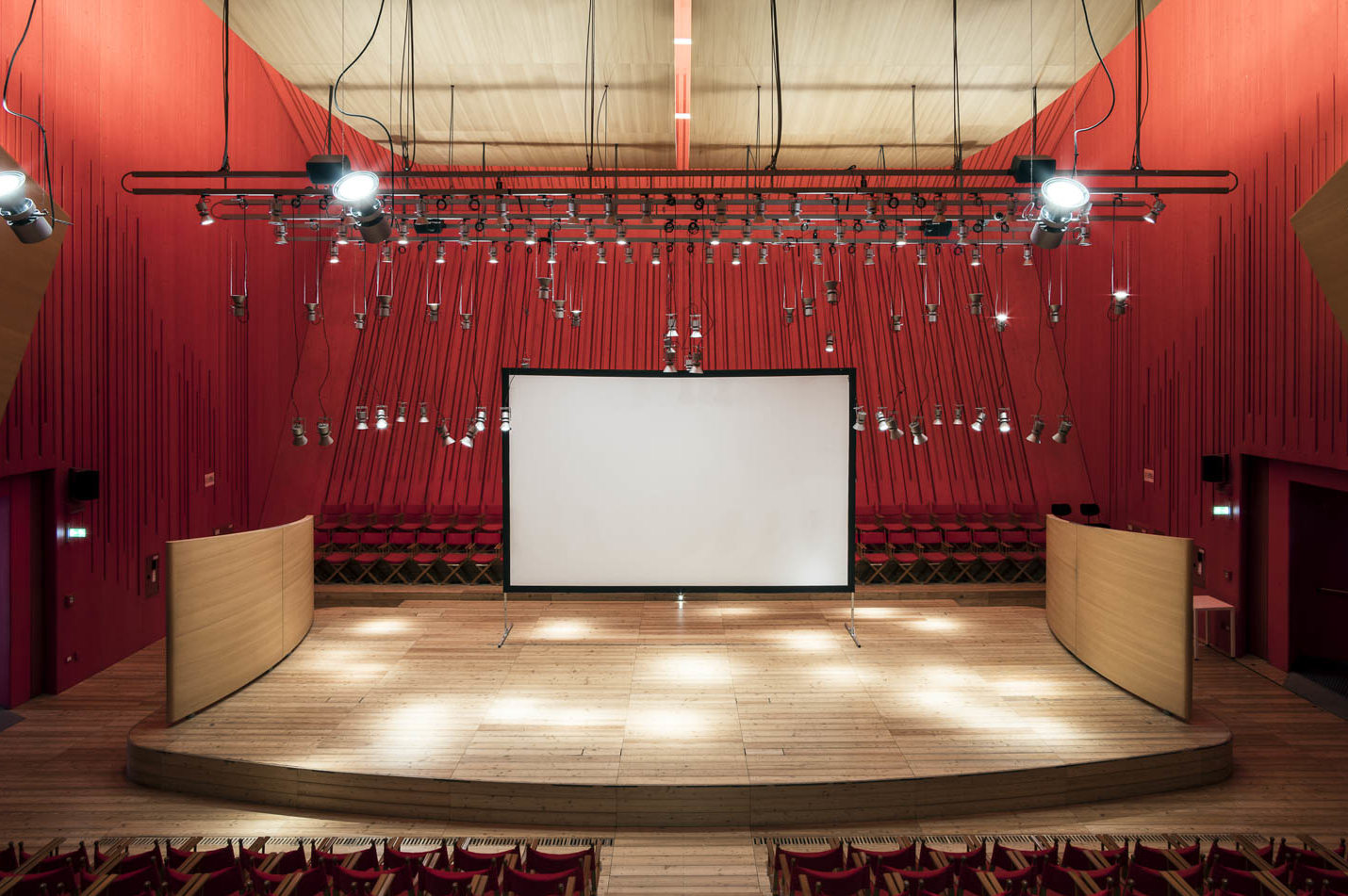
- Viale delle Medaglie d'Oro, 67100 L'Aquila