
Concerto C4 – Feedback, strumenti aumentati e live electronics
Programma
Luca Spanedda
LISTEN (Local InSTrument ENvironment) (2026)
per lastre metalliche e live electronics
Luca Favaro
Skin On Skin
solo live electronics
Claudio Panariello
OTIAC – “O totaro int’a chitarra” (2026)
feedback-augmented classical guitar: Pierpaolo Dinapoli
electronics: Matteo Tundo
Silvio Lotito
Kalvi (2024)
per violino con sordina pesante e live electronics
violino: Lorenzo Cambò
live electronics: Silvio Lotito
Matteo Tundo
Cuoio (2022–2026)
per violoncello e live electronics
violoncello: Elide Sulsenti
live electronics: Matteo Tundo
Federico Mari Fiamma
RID#003 (2025)
per tuba in feedback, chitarra in feedback, Digital Morphophone Environment
tuba: Agostino Tatulli
chitarra: Federico Mari Fiamma
Digital Morphophone Environment: Daniel Scorranese
Selezione della call for works
Note di sala
Luca Spanedda — LISTEN (Local InSTrument ENvironment)
This work belongs to a compositional project for live electronics investigating how to obtain complex adaptive systems from physical objects driven through feedback processes. Controlled by a DSP unit and the performer via a mixing interface, the work models autonomous sound agencies that emerge from the physical material properties of the objects themselves, making the system able to LISTEN to itself and express all its intrinsic sonic possibilities. This version focuses on metal plates that, when driven at the edge of chaos, expose different vibrational modes: in some cases behaving in relatively stable and linear ways, while in others shifting toward chaotic regimes. Distributed around the setup, some microphones operate not simply as amplification devices but as localised points of [observation]/listening, capturing different perspectives of the system’s activity and projecting the localised acoustic space of the object into the entire listening environment.
Luca Favaro — Skin On Skin
This performance piece stems from an ongoing research project on traditional percussive instruments from Valle d’Aosta and their integration into new musical works. The piece explores the sonic identity of the “Tambour”, a jingled frame drum played in the village of Cogne, through an improvisational electronic environment. The principal focus is the runé technique, in which performers drag a wet finger across the chamois skin of the drum to produce a howl-like resonance. When played collectively, these sounds merge into an ominous and immersive low-frequency rumble that fills the space with the instrument’s presence. The performance is built around recordings of a player demonstrating runé and related rhythmic patterns. These recordings are transformed live through custom Max patches and an Ableton Live setup, seeking the extension of a traditional instrument into new sound languages.
Claudio Panariello — OTIAC – “O totaro int’a chitarra”
In 2010, an octopus named Paul gained worldwide attention by correctly predicting 12 out of 14 matches of the FIFA World Cup, making him one of the most famous animal oracles in modern times. OTIAC – “O totaro int’a chitarra”, “the squid” (or in other versions, the octopus) “in the guitar”, a popular image from Neapolitan folklore – is a work conceived for the H[t] Duo. More than a Duo, this is in fact a Trio: the guitarist, the electronics performer, and the octopus in the guitar, a computational system that learns from the live performance. The work is based on feedback material live-produced by the guitarist and the electronics performer; these are picked and sorted by the system which builds a model of the musical material and, just like Paul the Octopus, decides (or even predicts) which sonic material to reinject into the guitar.
OTIAC is an exploration of the interplay between these agents within a shared feedback-based sound world, shaping the overall performance over time.
Silvio Lotito — Kalvi
La traduzione del titolo, dal Tamil, significa “studi”. Si tratta di una collezione di due brani per violino con sordina pesante ed elettronica che elabora le vibrazioni prodotte dalla sordina per generare materiale sonoro. Essi sono brevi studi di durata tra i due e i tre minuti ciascuno e hanno come obiettivo ultimo quello di esplorare aspetti dello strumento risultanti dalla fusione dei tre elementi – violino, sordina ed elettronica.
Matteo Tundo — Cuoio
This work explores perceptual tension as a physical and spatial phenomenon, treating sound as a material subject to deformation, resistance, and release. The compositional model draws on elastic traction: musical parameters behave like an elastic body under stress, whose perceptual shape changes according to energy, density, articulation, and spectral extension. The first part articulates four modes of tension: constant, progressive, impulsive, and cyclic, emerging from micro-variations rather than from harmonic or dynamic contrast alone. In the second part, the cello is amplified at a microscopic level through contact microphones, revealing internal frictions and resonances. This sound is delivered directly to the audience, placing the listener inside the instrument’s resonant body, while the electronics unfold in the surrounding space. The result is a dual listening scale, intimate and external, where tension becomes a perceptual dialogue between proximity and distance.
Federico Mari Fiamma — RID #003
This work is an attempt to inhabit a complex system where instruments, microphones, loudspeakers, and space exist in a direct, mutual relationship. It is an electroacoustic circuit in which every gesture, sound, and airflow variation can alter the unstable equilibrium of the whole, dynamically shaping the evolution of the generated sonic matter. Through the interaction between a tuba and a semi-acoustic guitar—both stripped of their traditional roles and recontextualized as resonant bodies—and the multi-buffer densification operated by the Digital Morphophone Environment, the piece outlines a suspended dialogue. In this shared acoustic and digital environment, which co-constructs itself over time, the phenomenon shifts from sound production to an emergent acoustic environment.
Biografie di autori ed esecutori
Luca Spanedda
Luca Spanedda (Rome, 1995)
Composer and performer of electroacoustic music focusing on the relations between humans, cybernetics, and acoustic spaces. After obtaining his Master degree cum laude in Electronic Music at the Conservatory of Rome, he is currently a PhD candidate at the Conservatory of L’Aquila, with a research work on “Complex Adaptive Systems for Performance in Live Electronics” (supervisors Agostino Di Scipio and Dario Sanfilippo).
Luca Favaro
Luca Favaro (Valle d’Aosta, 1993)
Sound artist and composer. His practice explores sound in all its forms and modes of engagement, ranging from sound installations and DJ sets to live performances. He began his musical training as a classical percussionist (BA degree from the Conservatory of Turin). He then studied orchestral percussion at the Accademia Nazionale di Santa Cecilia in Rome and pursued his MA degree at the Haute école de musique (HEM) in Geneva and the Conservatoire de la Vallée d’Aoste. He later turned to electronic music composition, drawing on sound design, club music, and field recording as foundational influences. His work investigates sound as an architectural element and a means of shaping spatial experience. As a composer, he has created music for various sound installations (including Chiasso Perduto, ARE, Castello Gamba, CARME, and the Museo Nazionale dell’Automobile in Turin) as well as for theatre, dance and cinema. Favaro has performed all across Europe under the alias Capiuz, a project at the intersection of dancefloor culture and sonic experimentation. He has released music on several labels and currently hosts Hectic, a radio program on Radio Raheem (Milan) dedicated to contemporary musical avant-gardes. As a developer, he has created several Max for Live devices released by Hide Productions. Favaro is currently a PhD candidate at the Conservatoire de la Vallée d’Aoste, where his research focuses on traditional percussion instruments and performance practices as resources for the composition of new musical works.
Claudio Panariello
Claudio Panariello (Napoli, 1989)
Composer and sound researcher. Working with electronics, machines, and human performers, his most recent artistic practice explores collaborative paradigms between artificial intelligence and human creativity, with a particular emphasis on the use of audio feedback and adaptive music systems. Currently a Postdoctoral researcher at the Université de Lille (France), he also teaches electronic music at the Conservatory of Turin (Italy).
Silvio Lotito
Silvio Lotito (Acquaviva delle Fonti, Bari, 2003)
Laureato al triennio di Musica Elettronica presso il Conservatorio di Bari, ora approfondisce gli studi di musica elettronica, attraverso il biennio dello stesso, e di composizione, attraverso la frequentazione del triennio di Composizione presso il medesimo conservatorio. Si sofferma sugli aspetti timbrici del suono e si focalizza sulla necessità di collocare lo stesso nello spazio.
Matteo Tundo
Composer of acoustic and electroacoustic music. His work explores sound perception, cognition, and neuroaesthetics in composition. He specialized in composition and new technologies at the conservatories of Florence, Parma, and Lugano, and at the Accademia Nazionale di Santa Cecilia. In 2024 he was composer in residence for Divertimento Ensemble and co-founded the h[t] DUO. He teaches computer music at the Conservatory of Brescia.
Federico Mari Fiamma
Federico Mari Fiamma (L’Aquila, 1995)
Composer, musician, live and studio sound engineer. He studied classical guitar for eight years before graduating in Electronic Music (Sound Engineering and Technology) at the Conservatory of L’Aquila, where he is currently completing his MA degree. His research focuses on non-linear complex systems, Max/MSP/Gen programming, and human-computer adaptive interaction in live electronics.
Lorenzo Cambò
Lorenzo Cambò (Maglie 2003)
Violinista, studente al Conservatorio di Bari. Membro fondatore e viola di spalla della Exquirimus International Chamber Orchestra. Collabora stabilmente con l’Orchestra Filarmonica Pugliese. Interprete del progetto Passaggi fra suono e tecnologia: comporre elettroacustico di Giorgio Nottoli.
Pierpaolo Dinapoli
Pierpaolo Dinapoli (Venosa 1989)
Guitarist, his artistic work focuses on contemporary music. He is a founding member of Azione_Improvvisa and the H[t] Duo, and has worked closely with prominent composers including Rachel Beja, Mauro Lanza, Marco Momi, Jose Manuel Lopez Lopez, and Giovanni Verrando, frequently premiering new works. Dinapoli has performed internationally at institutions and festivals such as Live@CIRMMT, Eclat, Milano Musica, Villa Medici. He is currently completing his PhD in Milan.
Elide Sulsenti
Cellist and researcher, her work focuses on experimental music, contemporary music, and new sonic possibilities. Trained at CSI Lugano, Hochschule Luzern, and international academies, she integrates technology, augmented instruments, and performative practices in unconventional contexts. Winner of the Fritz Gerber Award and Valentino Bucchi Award, she is currently a PhD researcher at the Conservatorio di Ferrara and artist-in-residence at IAC Malmö.
Agostino Tatulli
Drummer, percussionist, and multi-instrumentalist spanning jazz, wind bands, and avant-garde. He is MA candidate in Jazz Drums from the Conservatory of L’Aquila (under Roberto Gatto), and joined multiple percussion workshops.
- 15 Ott 2026
- 21:00
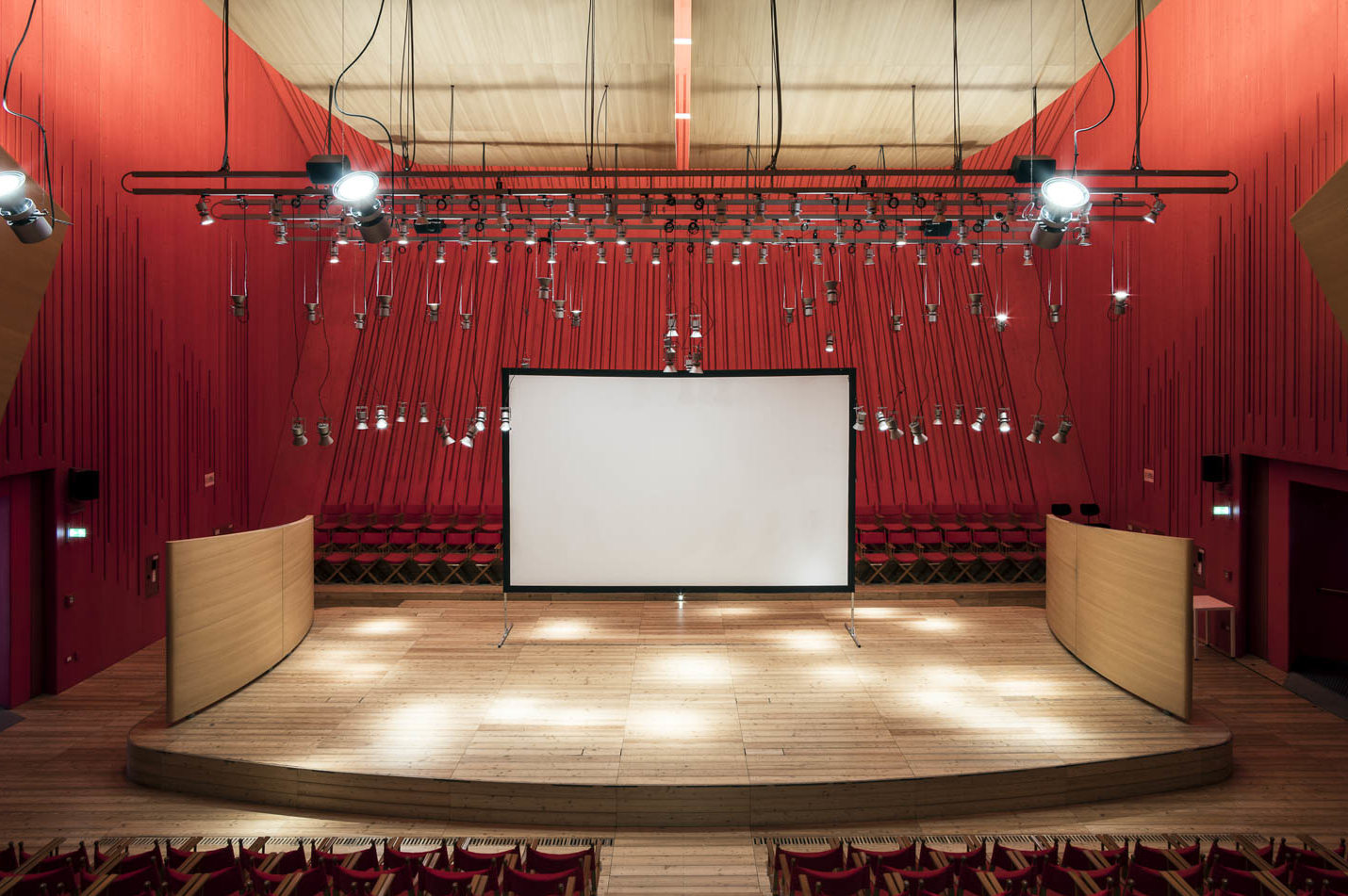
- Viale delle Medaglie d'Oro, 67100 L'Aquila